
Industries & Impact
Cast CA6NM vs CA15 Martensitic Stainless: When to Spec Which
The short answer: spec cast CA6NM (13Cr-4Ni, ASTM A487 / A743) when toughness, cavitation and erosion resistance, sub-zero service, or later weld repair matter — hydro turbine runners, wicket gates, high-head pump impellers, and any part that may be repair-welded. Spec cast CA15 (12Cr, ASTM A487 / A743) when the call is hardness, wear resistance, and cost in mildly corrosive martensitic duty where weldability and impact toughness are not requirements — cast valve trim, pump wear rings, and general-purpose martensitic bodies. We pour both grades on the same short-run book — patternless, no minimum, 1 to 100 pieces per campaign, with EN 10204 3.1 MTR, FAI, MPI (E709) or LPI (E165) on critical surfaces, and RT (E94) or UT (A609) on request.
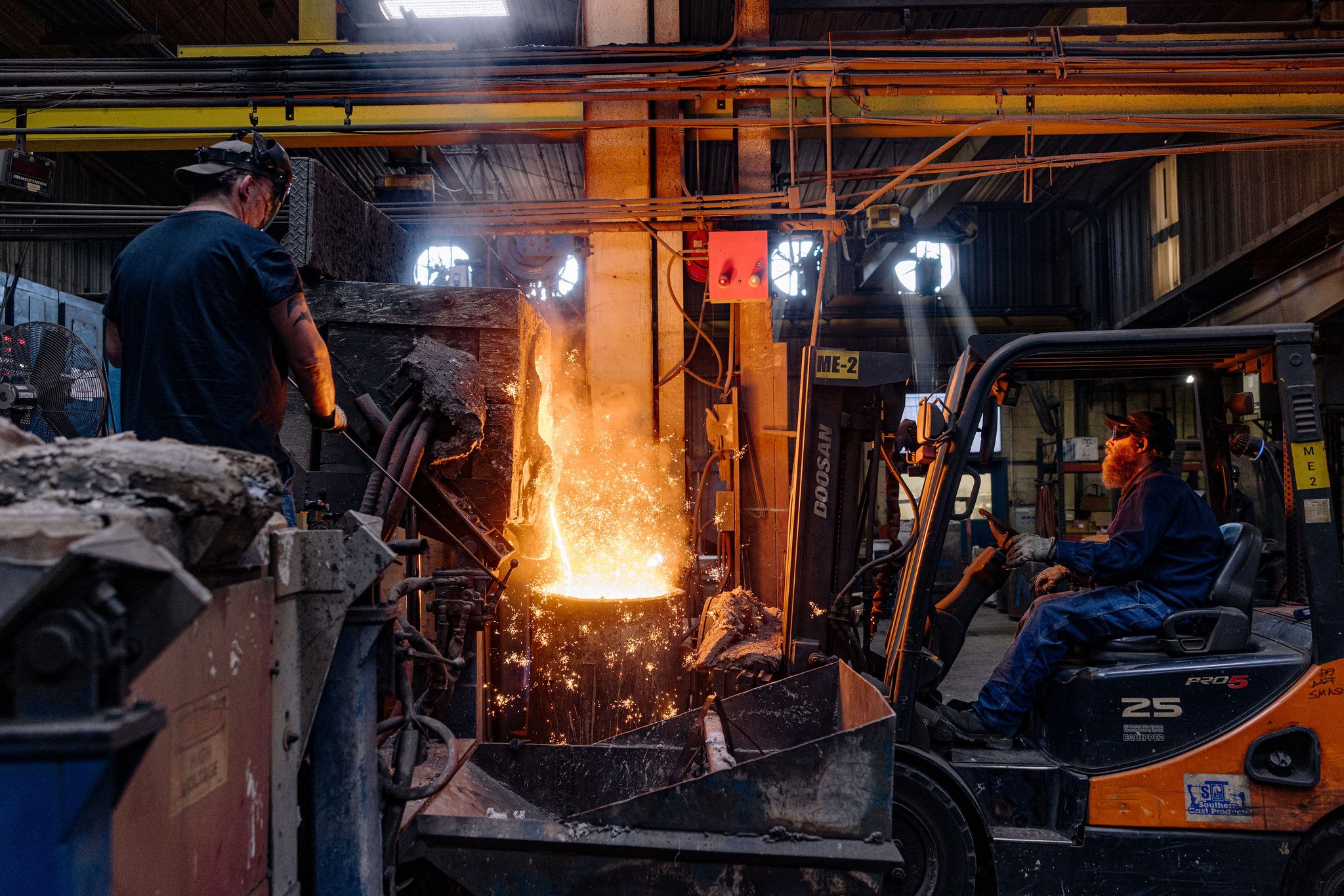
Who this page is for
This is written for design and reliability engineers writing the alloy call-out on a cast hydro turbine runner, wicket gate, pump impeller, valve body, or wear-part drawing; sourcing engineers scoping a 1-to-100-piece cast martensitic replacement; and MRO or reliability engineers replacing an obsolete cast martensitic part when the original OEM is gone. If you are choosing between the two workhorse cast martensitic stainless grades — and you want the technical reasons, not marketing — the rest of the page walks the decision.
The one-line decision
- Cast CA6NM (A487 / A743) — toughness, cavitation and erosion resistance, sub-zero toughness, and weldability. Low-carbon (max 0.06%) 13Cr-4Ni martensitic stainless. The hydro turbine runner and high-head pump wet-end alloy.
- Cast CA15 (A487 / A743) — higher hardness potential, wear resistance, and lower cost. Higher-carbon (up to 0.15%) 12Cr martensitic stainless. The cast valve trim, pump wear ring, and general-purpose martensitic body alloy.
Three second-order factors sharpen the call: weldability, toughness band, and heat-treat sensitivity. All three are covered below.
Chemistry — the numbers that drive the decision
Both grades are Fe-Cr martensitic stainless steels. Everything that separates them comes from carbon and nickel content:
- CA6NM — 11.5–14% Cr, 3.5–4.5% Ni, 0.4–1.0% Mo, max 0.06% C. The low carbon is the whole point. See ASTM A743 and ASTM A487.
- CA15 — 11.5–14% Cr, up to 1% Ni, no intentional Mo, up to 0.15% C. Higher carbon buys higher hardness at the cost of toughness and weldability.
The 4% nickel in CA6NM is what stabilizes the tempered-martensite microstructure at higher toughness levels and gives the grade its sub-zero performance. The low carbon is what makes it weldable — a repair weld on a CA6NM turbine runner is a metallurgically routine operation; a repair weld on a CA15 part risks brittle, crack-prone martensite in the heat-affected zone that has to be relieved by careful preheat and post-weld heat treat.
Cavitation, erosion, and toughness — where CA6NM wins
Cavitation is the failure mode that killed 13-4 Cr-Ni-free martensitics on hydro turbines a generation ago and drove the industry to CA6NM. Vapor bubbles collapse against the runner blade surface at ultrasonic frequencies; the local pressure spike is enough to plastically deform the metal and, over time, pit and remove material. CA6NM resists this because its tempered-martensite microstructure absorbs the impact and work-hardens the surface without cracking. Cast martensitic grades with less nickel and more carbon (including CA15) develop cavitation pits and cracks faster.
Toughness matters for the same reason — hydro turbine runners, wicket gates, and high-head pump impellers see cyclic loading, thermal transients on start-up, and occasional debris impact. CA6NM Class A typical Charpy V-notch impact is well above the 20 ft-lb threshold at ambient and holds up at sub-zero; CA15 Class A typical Charpy is materially lower, and CA15 Class B in the higher-hardness temper is lower still.
If the service is hardness-and-abrasion — a wear ring, a cast valve trim, a stuffing-box gland running against a metallic packing — CA15 in the higher-strength Class B temper wins. Higher hardness resists the abrasive contact wear. The trade-off is toughness and weldability, neither of which the wear-ring service requires.
Weldability — the sleeper decision factor
Anything that will be repair-welded during its service life should be CA6NM, not CA15. A hydro turbine runner is a canonical case: over a 30-to-50-year service life, a runner will be pulled, inspected, and repair-welded multiple times to restore blade profile and cavitation-eroded surfaces. That repair-weld cycle is only metallurgically routine on a low-carbon 13Cr-4Ni like CA6NM. On a higher-carbon CA15 casting, the weld HAZ develops hard, crack-sensitive martensite that requires careful preheat, controlled interpass temperature, and post-weld heat treat — and even then the risk of hydrogen-induced cracking is real. That is why the American Foundry Society and the hydro-turbine industry both moved definitively toward CA6NM for weldable-in-service castings.
If the part will never be welded in service — a cast valve trim, a pump wear ring — CA15 is fine, and its lower cost and higher hardness are the reason to spec it.
Heat treatment — where either grade goes wrong
Neither grade delivers the specified properties as-cast. Both require austenitize, quench, and temper — and CA6NM often requires a double temper to avoid retained austenite. This is not optional work, and it is not interchangeable between the two grades.
CA6NM per ASTM A743 / A487: austenitize typically around 1900–1950°F, air cool or oil quench, then temper (single or double) in the 1050–1150°F range. Class A is the softer, tougher temper. Class B is the higher-strength temper.
CA15 per ASTM A743 / A487: austenitize typically around 1750–1850°F, oil quench, then temper to the specified property class. Class A is the softer, tougher temper (roughly 90 ksi tensile). Class B is the higher-strength temper (roughly 115 ksi tensile).
The heat-treat record is a required deliverable — the 3.1 MTR should show austenitize, quench medium, and temper cycles with times and temperatures. A casting delivered without a documented, correct heat treat is not the alloy the specifier ordered.
Corrosion — where neither grade is the right call
Both grades are mildly corrosion-resistant — better than cast carbon steel (A216 WCB) but materially less resistant than austenitic 316-family stainless (cast CF8M / CF3M) or duplex CD4MCuN. Neither martensitic grade belongs in:
- Hot chloride-bearing service above about 60°C (140°F). Martensitic stainless pits and stress-corrodes under hot chloride. The correct cast alloy is duplex CD4MCuN — see low-volume duplex stainless casting supplier — CD4MCuN, no minimum. Guidance on chloride stress corrosion cracking behavior is published by the Nickel Institute and the International Molybdenum Association.
- Aggressive acid duty — sulfuric, hydrochloric, phosphoric process work at concentration and temperature. Move to Ni-base (Alloy 20, Hastelloy C-276) or duplex per the corrosion chart.
- High-chloride seawater in continuous submersion. Move to duplex CD4MCuN or super-duplex.
Specifying CA6NM or CA15 as a "cheaper stainless" substitute for austenitic 316 in chloride service is a common and expensive mistake. The martensitic grades were developed for cavitation and strength, not chloride corrosion.
Cost delta and lead time — the honest arithmetic
A useful mental model on cast martensitic stainless: CA15 at roughly 1× (relative to itself as baseline), CA6NM at roughly 1.15–1.30× on raw material and heat treat. The nickel content and slightly more involved heat-treat cycle drive the CA6NM premium. Both grades sit well below cast austenitic CF8M (roughly 1.5×–2× CA15) and cast duplex CD4MCuN (roughly 2×–3× CA15) on a per-pound alloy basis, because the martensitic grades use much less nickel than either the austenitic or duplex grades.
Lead time on a 1-to-100-piece cast martensitic run is set by the pattern step being collapsed onto the patternless route, plus the heat-treat cycle and any post-weld heat treat if the part will ship pre-welded. Typical short-run schedules we run: CA15 from about 4 to 7 weeks end-to-end; CA6NM from about 5 to 8 weeks end-to-end, driven mostly by the double-temper cycle. See lead times for a replacement casting when a line is down for the full schedule model.
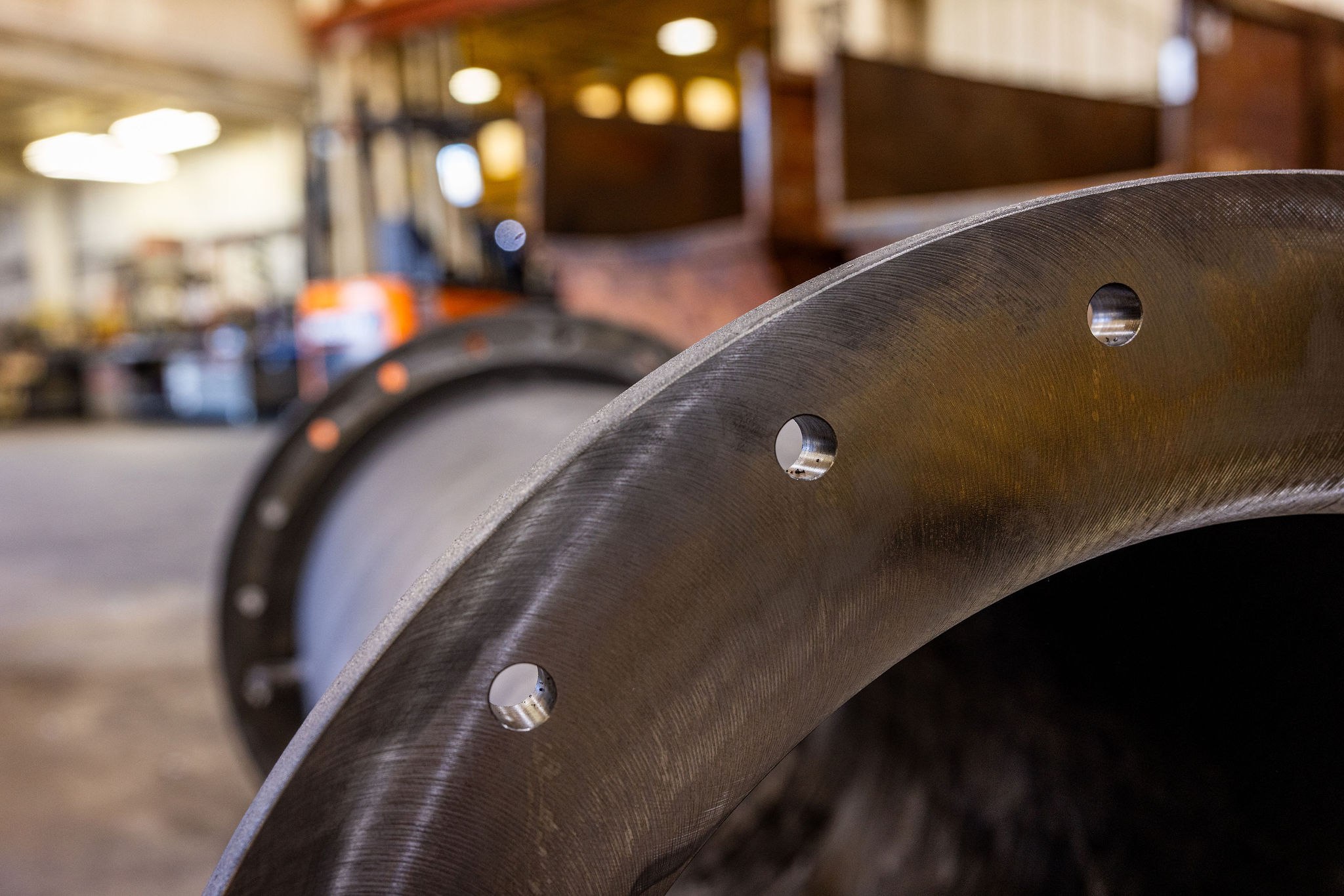
NDE — MPI and LPI both work on martensitic; alloy dictates the class
Both CA6NM and CA15 are martensitic — ferromagnetic — so ASTM E709 magnetic particle inspection is the standard surface NDE method and develops indications reliably. ASTM E165 liquid penetrant is applicable and is often preferred on tight geometry (a machined seat bore, a small radius) where the MPI yoke or coil cannot get an even field. Radiography per ASTM E94 or ultrasonic per ASTM A609 covers subsurface volumetric flaws on pressure-containing bodies and rotating parts.
Standard NDE packages by alloy and part class:
- CA6NM hydro turbine runner / wicket gate / high-head pump impeller — visual per MSS-SP-55, magnetic particle per ASTM E709 on all machined critical surfaces, radiography per ASTM E94 on the hub-and-blade transitions per drawing acceptance level, PMI by handheld XRF or benchtop OES on request, dye-penetrant (E165) on tight geometry where MPI is limited.
- CA15 valve trim / pump wear ring / general-purpose martensitic body — visual per MSS-SP-55, magnetic particle per ASTM E709 on critical surfaces, radiography per ASTM E94 on the pressure-containing body when the spec requires it, PMI on request.
- Documentation on both — EN 10204 3.1 MTR with chemistry, mechanical properties, heat-treat cycle, and NDE report as the base package. 3.2 available.
What the short-run pour actually looks like
The patternless route is the same shape for CA6NM and CA15, with alloy-specific heat-treat cycles swapped in:
- Days 1–3. CAD review — or a 3D-scan and digital-twin rebuild if only a sample is available (see from 3D scan to cast part). DFM feedback on draft, parting, machining stock, hot spots, and shrink risk. Alloy call-out confirmed (CA6NM Class A or B, or CA15 Class A or B).
- Days 3–7. Solidification simulation in MAGMA / NovaCast. Feeding and gating designed against the simulation. Martensitic grades are prone to shrink at heavy sections — the simulation earns its keep here.
- Days 7–20. 3D-printed sand mold built and dressed (3D sand printing). Melt to the ordered A487 or A743 grade, poured, shaken out, cleaned. Heat treat per the ordered class: austenitize, quench, temper (double temper on CA6NM as required by the print).
- Days 20–30. CNC machining of seat bores, flange faces, blade profiles, seal-chamber IDs, and bolt patterns on our in-house equipment (see CNC machining).
- Days 30–40. NDE per spec (MPI / LPI on critical surfaces, RT or UT on the pressure-containing body as the spec requires), FAI dimensional inspection, PMI on request, MTR issued with heat-treat record, final visual per MSS-SP-55, pack and ship.
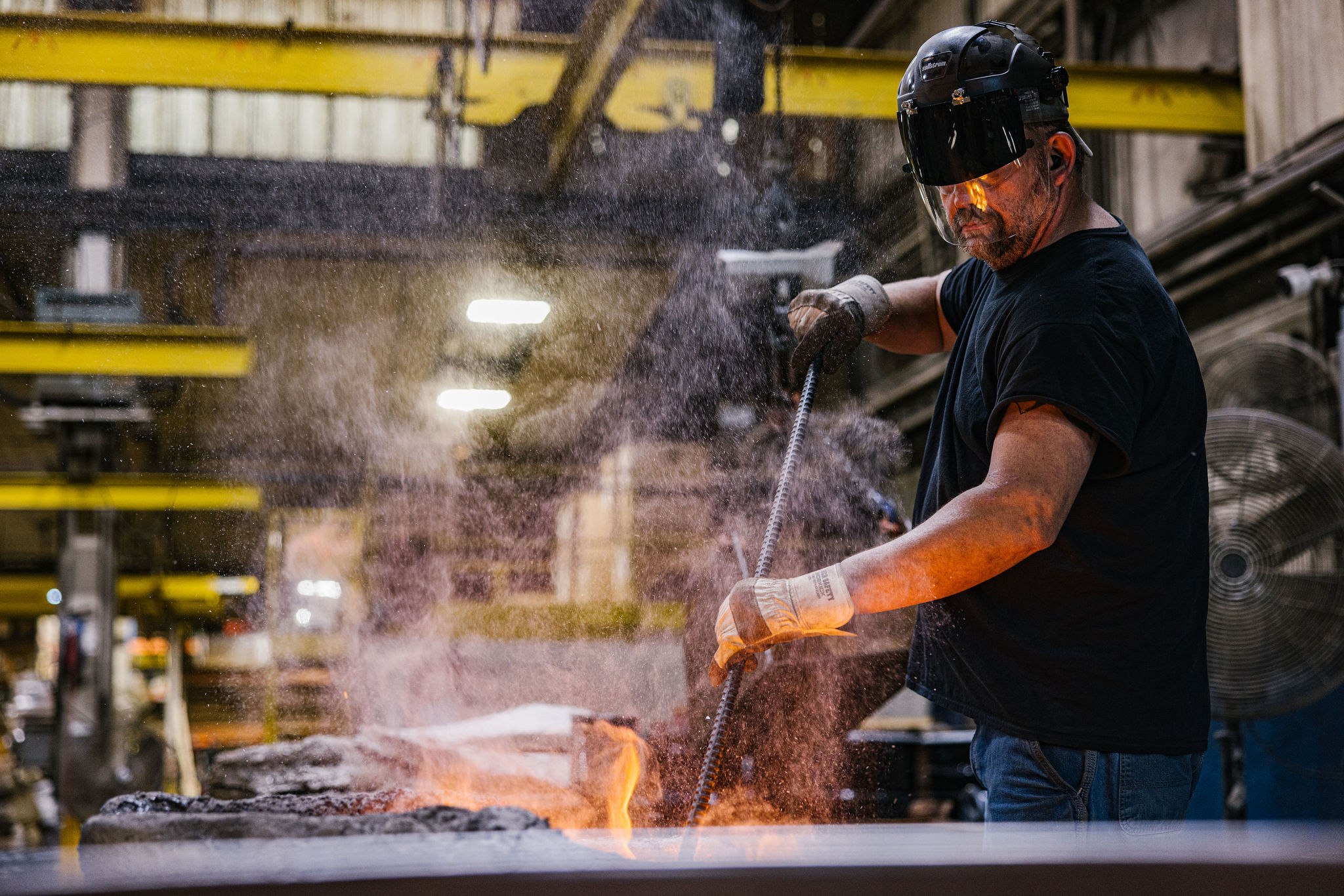
What we pour on the martensitic side
Directly from our metals-poured page, in decision order for a cast martensitic stainless part:
- ASTM A487 CA6NM Class A or Class B — heat-treated martensitic pressure work; hydro turbines, high-head pumps, weldable-in-service castings.
- ASTM A487 CA15 Class A or Class B — heat-treated martensitic pressure work; valve trim, pump wear parts, general-purpose martensitic bodies.
- ASTM A743 CA6NM Class A or Class B — general corrosion service, martensitic 13Cr-4Ni.
- ASTM A743 CA15 Class A or Class B — general corrosion service, martensitic 12Cr.
Companion articles for the neighboring alloy decisions: Turbine and energy castings in CA6NM and carbon steel — short run (application-side scope for CA6NM in power generation) and CF8M vs A216 WCB cast valve body — when to spec which (the austenitic-vs-carbon-steel decision on the valve-body side).
Not a repair shop, not a pump/turbine OEM aftermarket, not a stockist — independent US foundry
The wedge on a martensitic-vs-martensitic cast decision matters, because most of the shops that come up on a search are one of four things:
- A repair or fab shop that will weld-repair or fabricate the part out of forged bar or plate. That is a different product; if the drawing calls out a casting in a specific ASTM A487 or A743 grade and class, only a casting to that spec — with the correct heat treat and NDE — is compliant.
- A turbine or pump OEM's in-house or affiliated foundry, which will pour their line — not your drawing, and not necessarily to your class.
- A stainless stockist that resells wrought 410 or 420 bar stock. Wrought and cast martensitic stainless are separate specifications with different microstructure, different acceptance criteria, and different heat-treat responses. Wrought 410 is not cast CA15.
- A specialty wear-parts foundry pouring high-chrome white iron or Ni-Hard — a different alloy family than CA6NM / CA15, aimed at pure abrasion service. Not a substitute for a martensitic stainless casting.
We are an independent US foundry, poured domestic melt, not tied to any pump or turbine OEM, and we pour your drawing in the martensitic class the service actually needs.
The honest disclaim ring — where we route you
Better a fast "not us" than a slow bad-fit quote. If the martensitic call actually needs one of the following, we will say so on the RFQ and point you elsewhere:
- Super-martensitic (13Cr-6Ni-2.5Mo, 15Cr-5Ni, F6NM heavy sections) beyond CA6NM class B — specialty oil-and-gas well-service work. Not on our current pour list; route to a specialty martensitic foundry.
- Precipitation-hardening stainless (17-4 PH, 15-5 PH cast equivalents) — different metallurgy, different heat treat, different acceptance criteria.
- Hardened cast bar or forged martensitic product (wrought 410, 420, 431) — mill product, not a casting. Different spec.
- High-chrome white iron (ASTM A532), Ni-Hard, or A128 Hadfield manganese — abrasive wear castings on crushers, mill liners, dredge pumps. Not on our pour list; route to a specialty wear-parts foundry.
- Duplex or super-duplex stainless — for hot chloride, seawater, or high-strength-plus-chloride service. We pour CD4MCuN (ASTM A890 / A995); super-duplex (SAF 2507, J93404) is not on our list.
- ASME III N-stamp on nuclear service, or API 610 monogram on the assembled pump. Those stamps live with the assembly vendor; the foundry pours the casting.
- 500+ pieces per year, indefinitely, on a stable design. Above roughly 500 pieces per year running indefinitely, the arithmetic favors a hard-tooled traditional-pattern foundry — the SFSA short-run economics data covers the crossover.
- Line-down, on-a-truck-tomorrow. A metallurgically-correct CA6NM or CA15 casting with austenitize, quench, temper, NDE, MTR, and FAI takes weeks, not hours.
- Hobby, decorative, or one cheap trinket. Not the shop.
How to specify a short-run cast martensitic part so quoting goes fast
The faster you can answer these on the RFQ, the faster we can quote — and the more accurate the quote will be:
- Part: drawing or STEP model (best), or a sample plus photos plus key dimensions (workable). For obsolete parts with no drawing, see legacy part replication.
- Material: ASTM number, grade, and class — e.g., "ASTM A487 CA6NM Class A," "ASTM A743 CA15 Class B." If the drawing says "13-4 stainless casting," say so — that is CA6NM. If it says "cast 410 stainless," that is CA15.
- Service: fluid, pressure class, working temperature range, chloride ppm if any, cavitation exposure, weld-repair history or expectations, and any code reference (ASME B16.34, NACE MR0175 for sour service, etc.).
- Quantity: the realistic run (1, 5, 25, 100) and whether repeat orders are likely.
- Machined features: seat bore, flange face, blade profile, bolt circle, seal-chamber ID, and any concentricity, flatness, or profile-tolerance callouts.
- Inspection: visual per MSS-SP-55 assumed; state MPI (E709) / LPI (E165) / RT (E94) / UT (A609) / PMI / hardness-check requirements explicitly. Include acceptance criteria.
- Documentation: 3.1 MTR assumed with heat-treat record; note if you need 3.2, PPAP, or additional records.
- Schedule: when do you actually need the parts on a truck.
You can send it over here and we will come back with a path, a real schedule, and a price.
Where this fits in our wider short-run work
- Turbine and energy castings in CA6NM and carbon steel — short run — power-generation vertical scope for CA6NM.
- Lead times for a replacement casting when a line is down — the schedule model behind the 4-to-8-week martensitic band.
- CF8M vs A216 WCB cast valve body — when to spec which — the austenitic-vs-carbon-steel decision page on the valve-body side.
- Low-volume CF8M stainless casting supplier — what to expect — austenitic 316-family procurement companion.
- Low-volume duplex stainless casting supplier — CD4MCuN, no minimum — the "hot chloride, move beyond martensitic and austenitic" landing.
- Pump volute casing replacement cast from sample or scan — high-head pump wet-end companion.
- Heavy-equipment wear-part castings, reverse-engineered replacement — wear-part decision, including where CA15 fits.
- Replacing a discontinued pump or valve casting when the OEM is gone — MRO buyer-intent pillar.
- Low-volume, high-complexity castings — capability overview.
- Metals poured — full alloy list, including every grade named on this page.
Sources & standards
- ASTM A487 — Standard Specification for Steel Castings Suitable for Pressure Service.
- ASTM A743 — Castings, Iron-Chromium, Iron-Chromium-Nickel, Corrosion Resistant, for General Application.
- ASTM A890 — Castings, Iron-Chromium-Nickel-Molybdenum Corrosion-Resistant, Duplex.
- ASTM E165 — Standard Practice for Liquid Penetrant Testing.
- ASTM E709 — Standard Guide for Magnetic Particle Testing.
- ASTM E94 — Standard Guide for Radiographic Examination.
- ASTM A609 — Standard Practice for Ultrasonic Examination of Carbon, Low-Alloy, and Martensitic Stainless Steel Castings.
- MSS-SP-55 — Quality Standard for Steel Castings for Valves, Flanges, and Fittings and Other Piping Components (Visual Method).
- EN 10204 — Metallic products: types of inspection documents (3.1 MTR).
- ASME B16.34 — Valves — Flanged, Threaded, and Welding End (pressure-temperature ratings).
- Nickel Institute — Reference resources on stainless steel corrosion behavior.
- International Molybdenum Association — Reference resources on molybdenum-bearing stainless steels.
- Steel Founders' Society of America (SFSA) — Short-run cast steel economics and process guidance.
- American Foundry Society (AFS) — Foundry practice references.
FAQ
When should I spec CA6NM instead of CA15 for a cast martensitic stainless part?
Spec CA6NM (13Cr-4Ni, low carbon) when the service demands high toughness, cavitation and erosion resistance, sub-zero toughness, or later field-weld repair. Spec CA15 (12Cr, higher carbon) when the service is a hardness-and-strength martensitic call in mildly corrosive duty where cost and wear resistance matter more than toughness or weldability. Hydro turbine runners, wicket gates, and high-head pump impellers are the textbook CA6NM calls. Cast valve trim, pump wear rings, and general-purpose martensitic bodies are the textbook CA15 calls.
What is the practical difference between CA6NM and CA15 chemistry?
CA6NM is about 12–14% chromium, 3.5–4.5% nickel, 0.4–1.0% molybdenum, with maximum 0.06% carbon. CA15 is about 11.5–14% chromium, up to 1% nickel, and up to 0.15% carbon — no intentional molybdenum. The 4% nickel and low carbon in CA6NM give it good toughness and weldability. The higher carbon and lower nickel in CA15 give it higher hardness potential and higher wear resistance but poorer weldability and lower toughness.
Why is CA6NM the standard for hydro turbine runners?
Hydro turbine runners see cyclic loading, cavitation-driven surface erosion, sand-in-water abrasion, and — critically — the need to be repair-welded in place over decades of service. CA6NM was developed for exactly that duty: high toughness, cavitation resistance, and low enough carbon (max 0.06%) that field-weld repair is metallurgically routine, not a specialty operation. CA15, at up to 0.15% carbon, will readily form hard, crack-prone martensite in the weld heat-affected zone, which is why it is not the alloy of choice for parts that will be welded.
What heat treatment does each grade require?
Both grades are austenitized and quenched, then tempered. CA6NM is normalized-and-tempered per ASTM A487 / A743 CA6NM Class A (softer, tougher — for most hydro and pump work) or Class B (higher strength). The tempering cycle on CA6NM is often a double temper to avoid retained austenite and stress cracking. CA15 per ASTM A487 / A743 is austenitized, oil-quenched, and tempered — Class A softer and tougher, Class B higher hardness and strength. Skipping or bungling the heat treat on either grade produces a casting that is not the alloy the specifier ordered — this is not optional work.
Which grade is more corrosion resistant?
Both grades sit in the mildly corrosion-resistant band — better than carbon steel, worse than austenitic 316-family stainless (CF8M) or duplex CD4MCuN. CA6NM is marginally better than CA15 in most media because of its molybdenum content, but neither belongs in hot chloride service (where they would pit and stress-crack), aggressive acid duty, or high-chloride seawater. For hot chloride or aggressive corrosion, the correct cast alloy is duplex CD4MCuN (ASTM A890 / A995) — see our companion article. Do not spec martensitic stainless as a cheaper substitute for austenitic or duplex in chloride service.
Which NDE method applies to CA6NM and CA15?
Both grades are martensitic — ferromagnetic — so magnetic particle inspection per ASTM E709 is the standard surface NDE method. Liquid penetrant per ASTM E165 also works and is common where the geometry (a machined seat bore, for instance) is not amenable to MPI. Radiography per ASTM E94 or ultrasonic per ASTM A609 covers subsurface defects on pressure-containing bodies and rotating parts. This is a different NDE decision from austenitic CF8M / CF3M, where MPI does not apply because the material is essentially non-magnetic.
Can you pour both grades in the same short run?
Yes. We are an independent US foundry that pours ASTM A487 and A743 CA6NM Class A or B, and ASTM A487 and A743 CA15 Class A or B, on the same short-run book. Every referenced grade is on our /metals-poured list. One RFQ, one foundry, one documentation package, patternless / 3D-printed sand mold, 1–100 pieces per campaign, no minimum. Pick the alloy the service actually needs — CA6NM for toughness and weldability, CA15 for hardness and cost — not the alloy the foundry only pours.
Do you hold ASME III N-stamp or API 610 monogram on the finished pump or turbine?
No. We pour the casting to the ordered ASTM grade, heat treat it per Class A or B as specified, and ship it with a 3.1 MTR, FAI, and the NDE package the print requires. The finished-pump or finished-turbine hydrostatic test, cavitation test, ASME III N-stamp on nuclear-service work, and API 610 monogram on the assembled pump are the downstream assembly vendor's scope — the buyer's engineer owns pressure rating and code qualification for service. We are honest about that scope line up front.
Have a martensitic-stainless drawing or sample? Send us the spec and the service.
We will tell you honestly whether CA6NM or CA15 — and which class — is the right call, and then pour it.
Get a Quote